UXR AI OPs
Designing AI-Enabled Research & Operations Systems to Scale Insight, Increase Velocity, and Deliver 100% Faster Planning
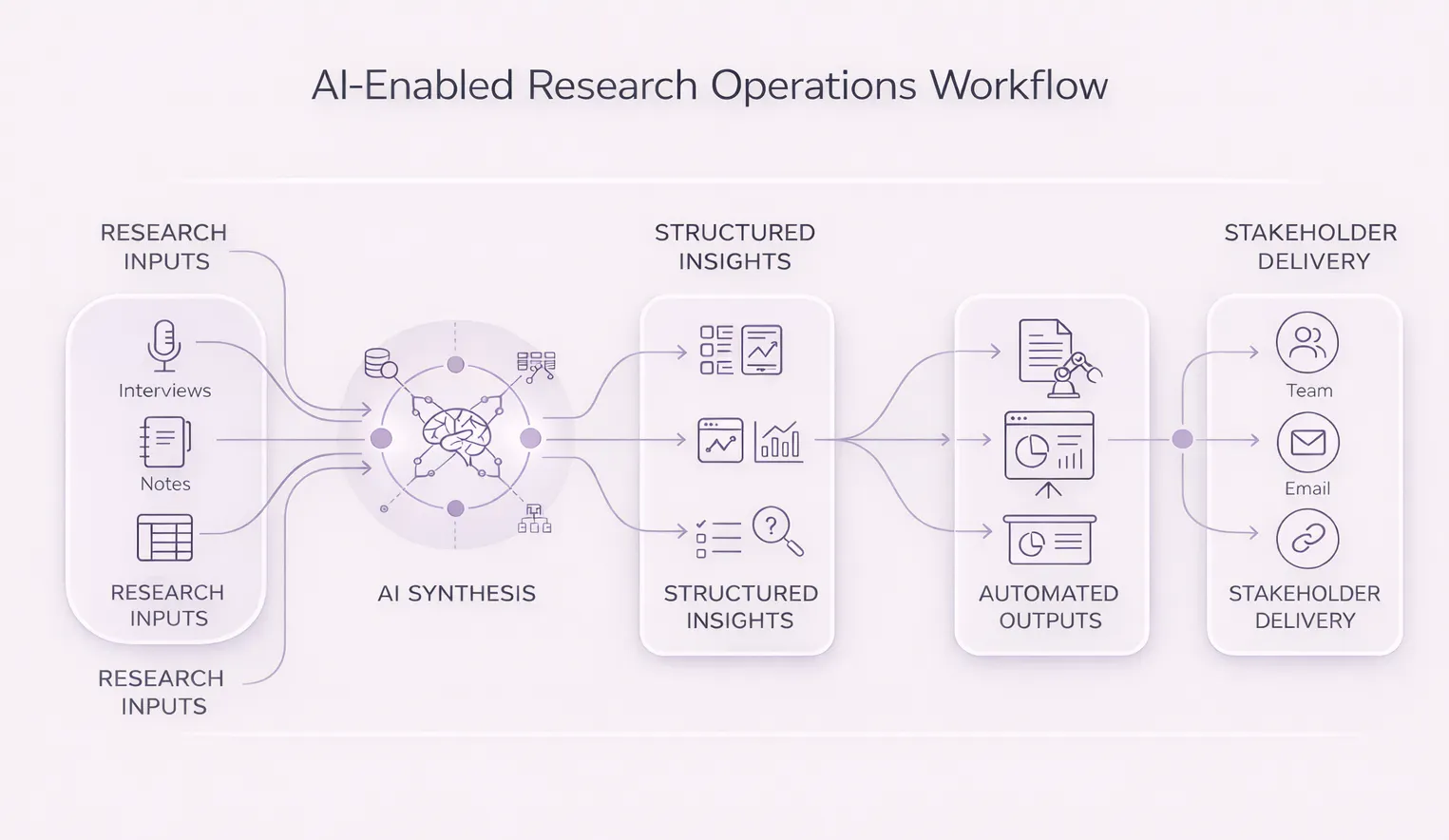
Designing AI-Enabled Research & Operations Systems
Transforming manual research workflows into scalable systems that accelerate insight and decision-making
About the Project
The Promise: Shift UX Research from: project-based execution → AI-enabled insight infrastructure
The Outcome:
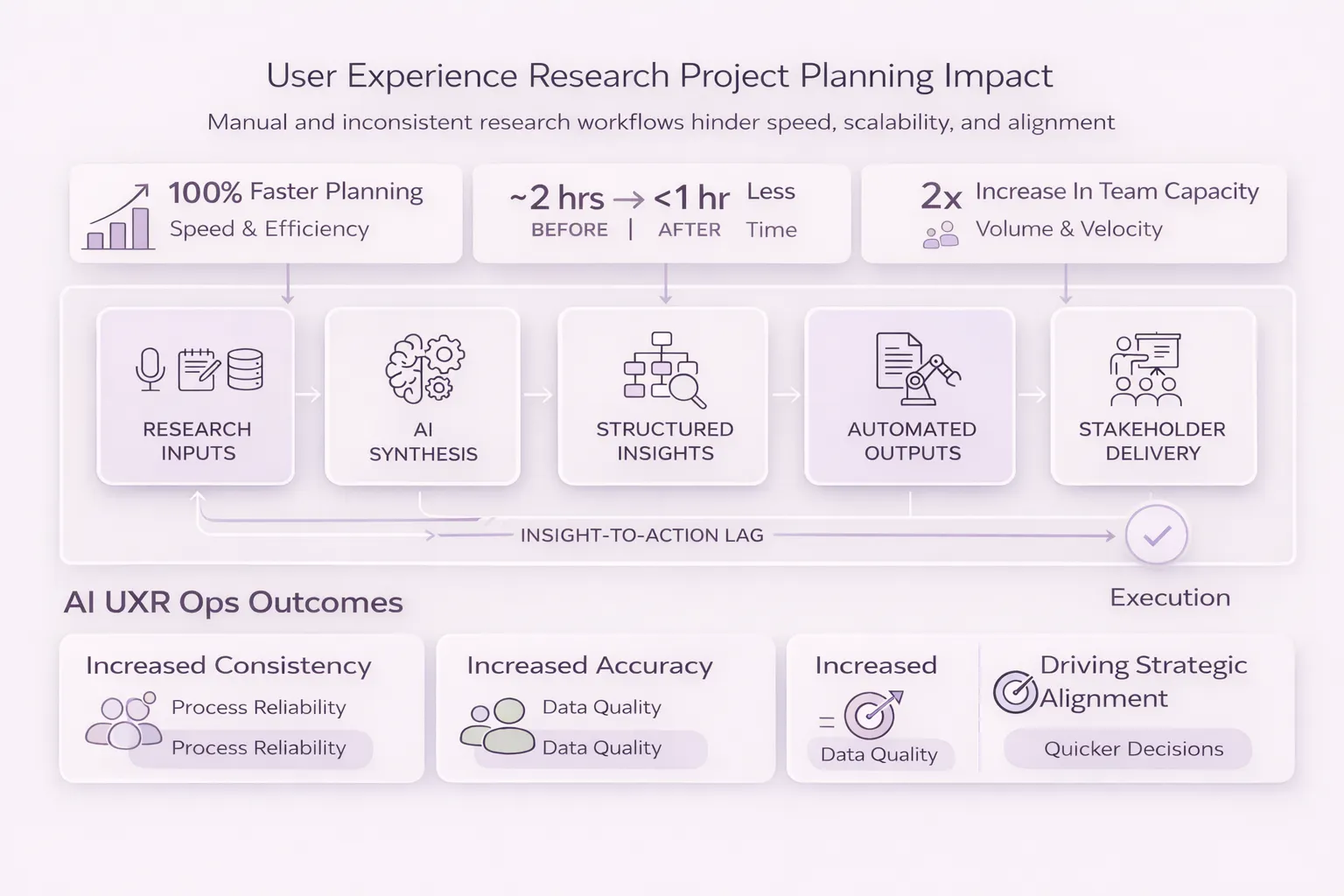
- 100% faster planning
- 50% reduction in time (~2 hrs → <1 hr)
- 2× increase in team capacity
- ↑ consistency · ↑ accuracy · ↑ decision velocity
The Project:
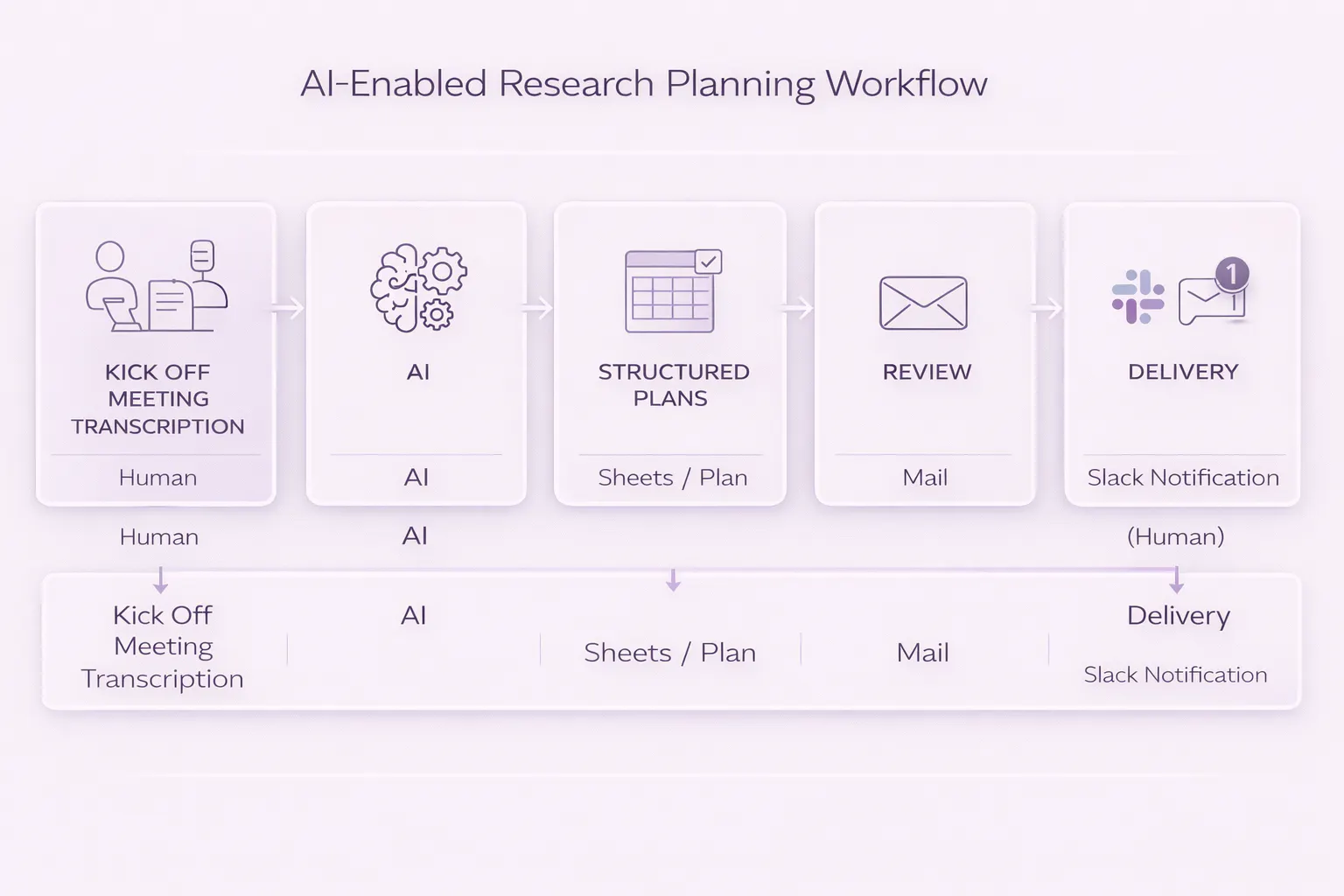
Built an AI-powered UXR Ops workflow that converts meeting inputs → structured research plans automatically, with human-in-the-loop review.
The Client:
Conceptual enterprise use case
(Applies to product teams, AI startups, healthcare systems scaling research ops)
Role and Workflow Application:
- UX Researcher
- UX Research Manager
- UX Research Operations
- Enterprise Workflows
The Problem
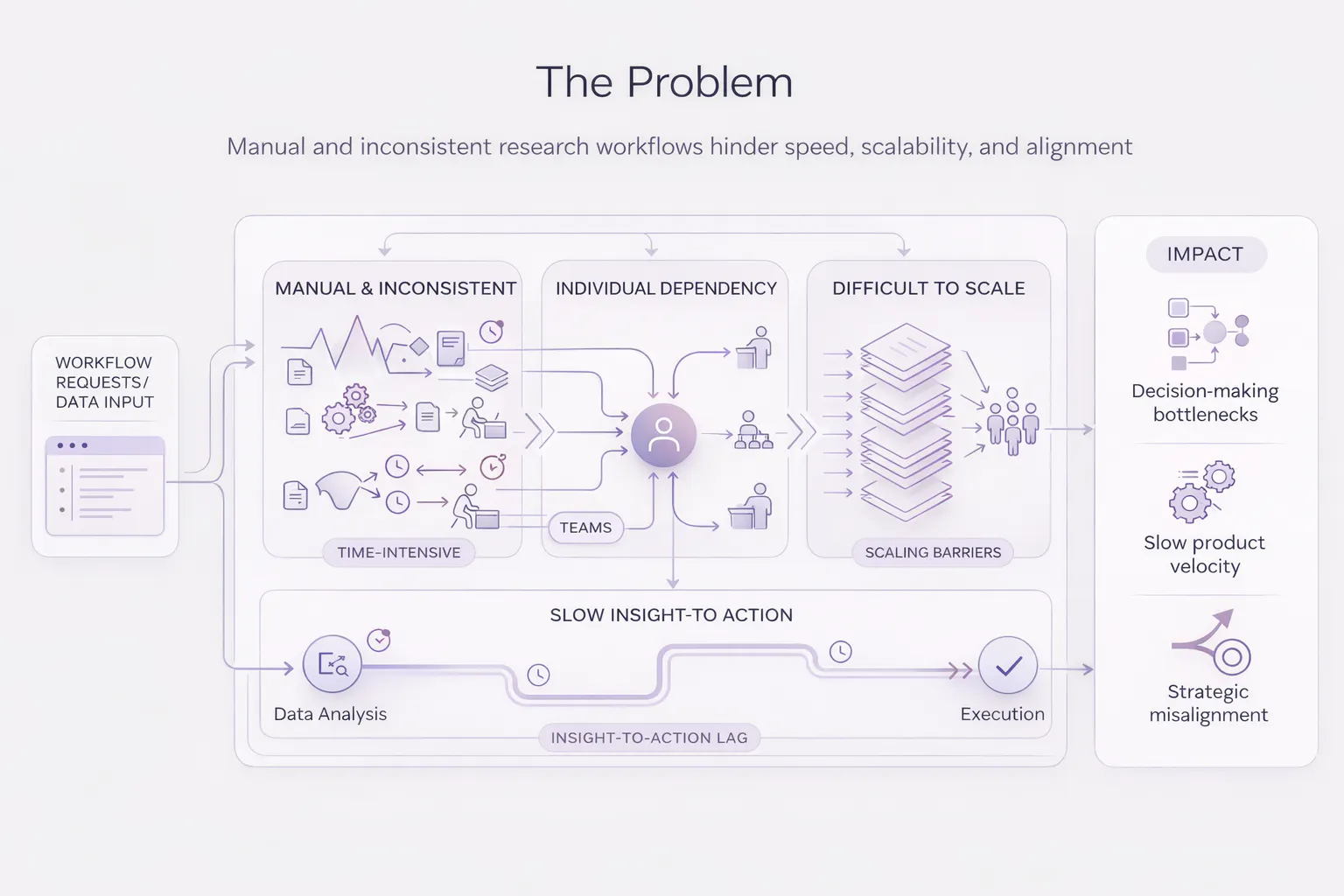
- Manual, time-intensive workflows
- Inconsistent outputs across teams
- Limited scalability
- Slow insight → decision cycle
👉 Result: bottlenecks in product velocity and strategic alignment
The Impact
Operational
- 100% faster planning
- 50% time reduction
- 2× project volume
Quality
- +100% consistency
- +100% accuracy
Strategic
- Faster decisions
- Better alignment
- Increased stakeholder trust
The Challenge
Project Question
How might we transform manual UXR planning into a scalable, AI-enabled system without sacrificing quality or governance?
Key Focus
- Automate structured, repeatable workflows
- Convert unstructured inputs → usable outputs
- Maintain accuracy + trust with human review
- Design for scale using accessible tools
Team · Role · Timeline
Role: AI / UXR Ops Strategist
Timeline: 3 days
Scope: Research Ops · AI Workflows · System Design
Tools: ChatGPT · Make · n8n · NotebookLM · Miro
Focus: Automation · Scaling · Governance
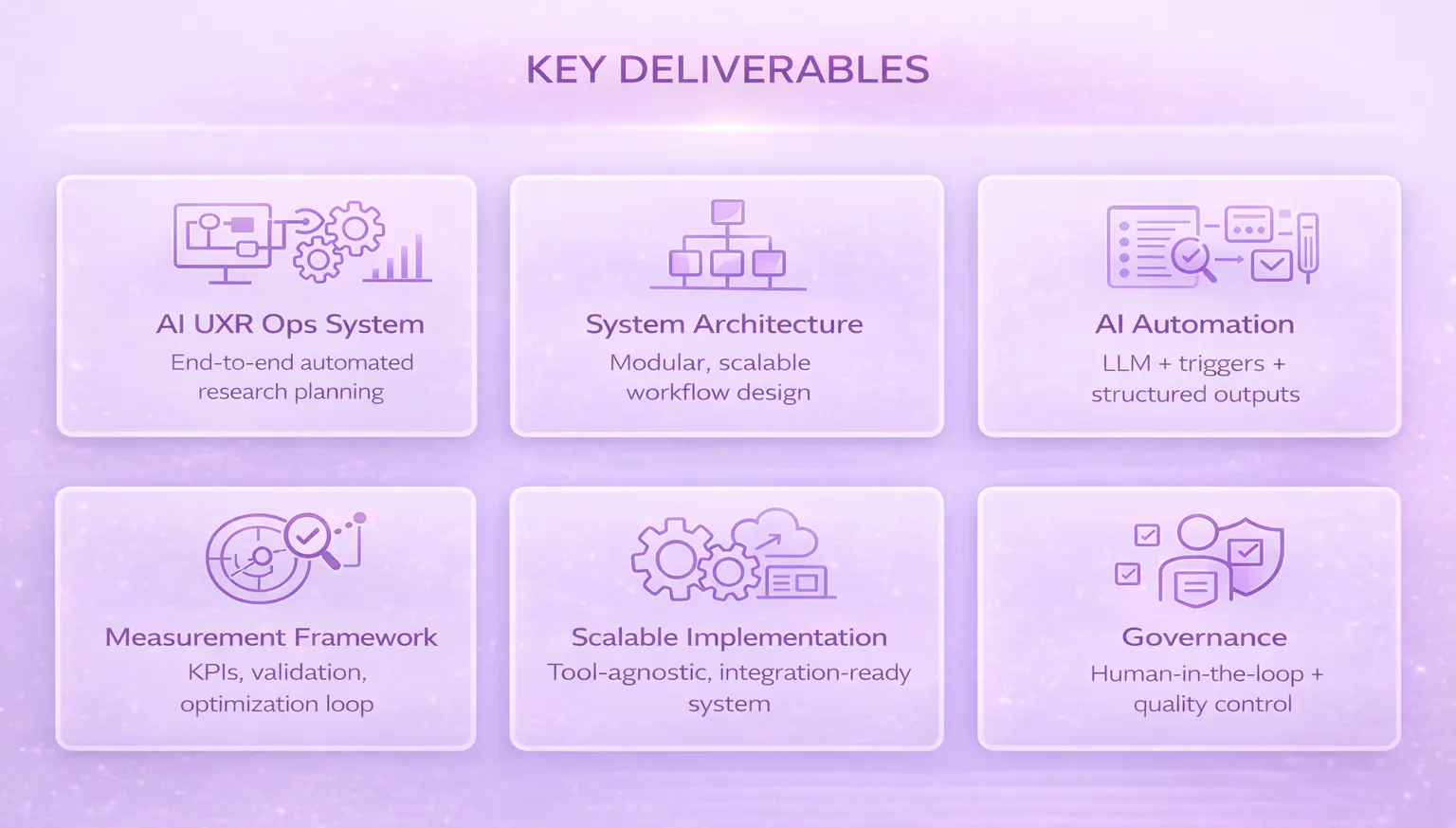
Key Deliverables
1. AI UXR Ops System: End-to-end automated research planning
2. System Architecture: Modular, scalable workflow design
3. AI Automation: LLM + triggers + structured outputs
4. Measurement Framework: KPIs, validation, optimization loop
5. Scalable Implementation: Tool-agnostic, integration-ready system
6. Governance: Human-in-the-loop + quality control
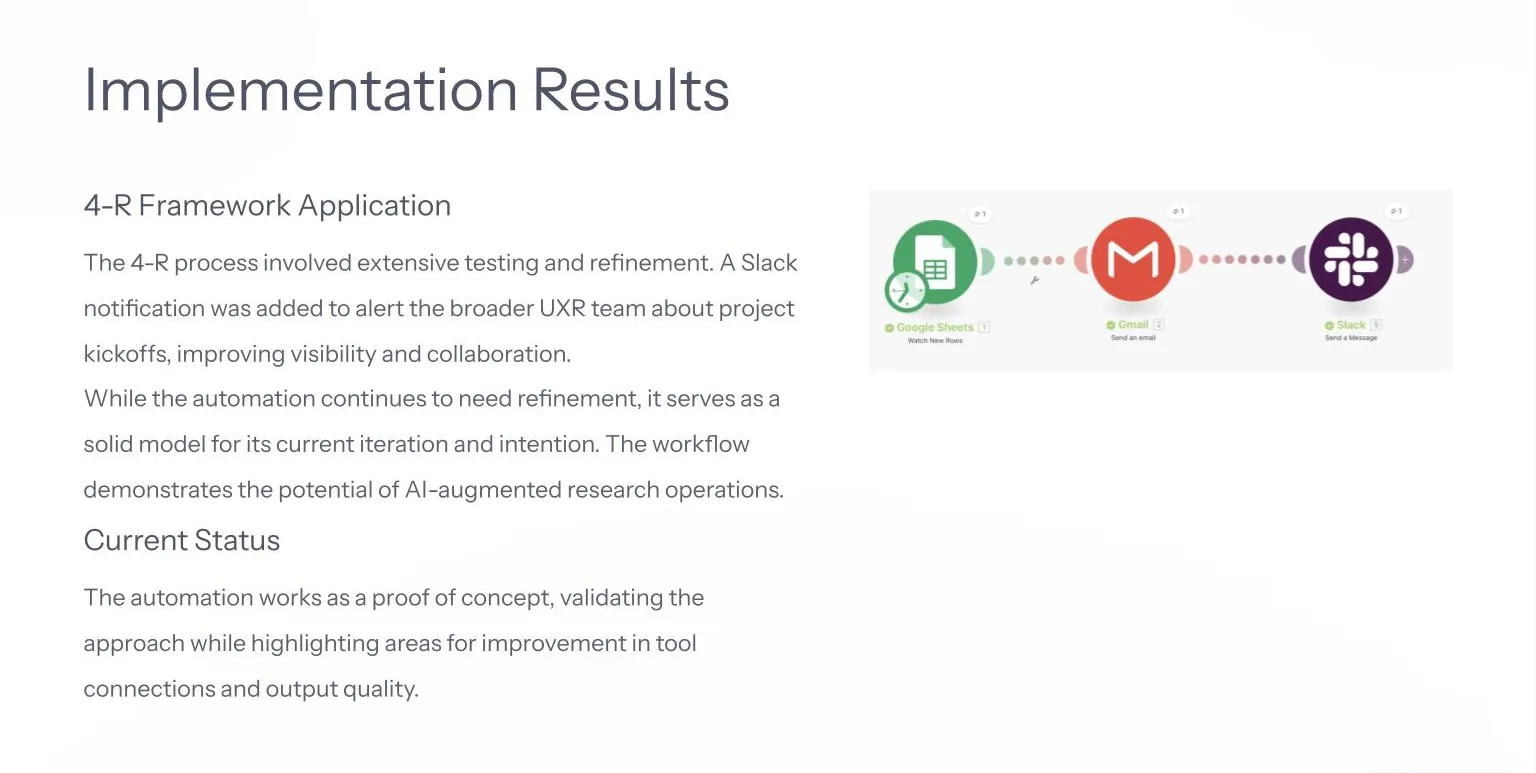
Transformation
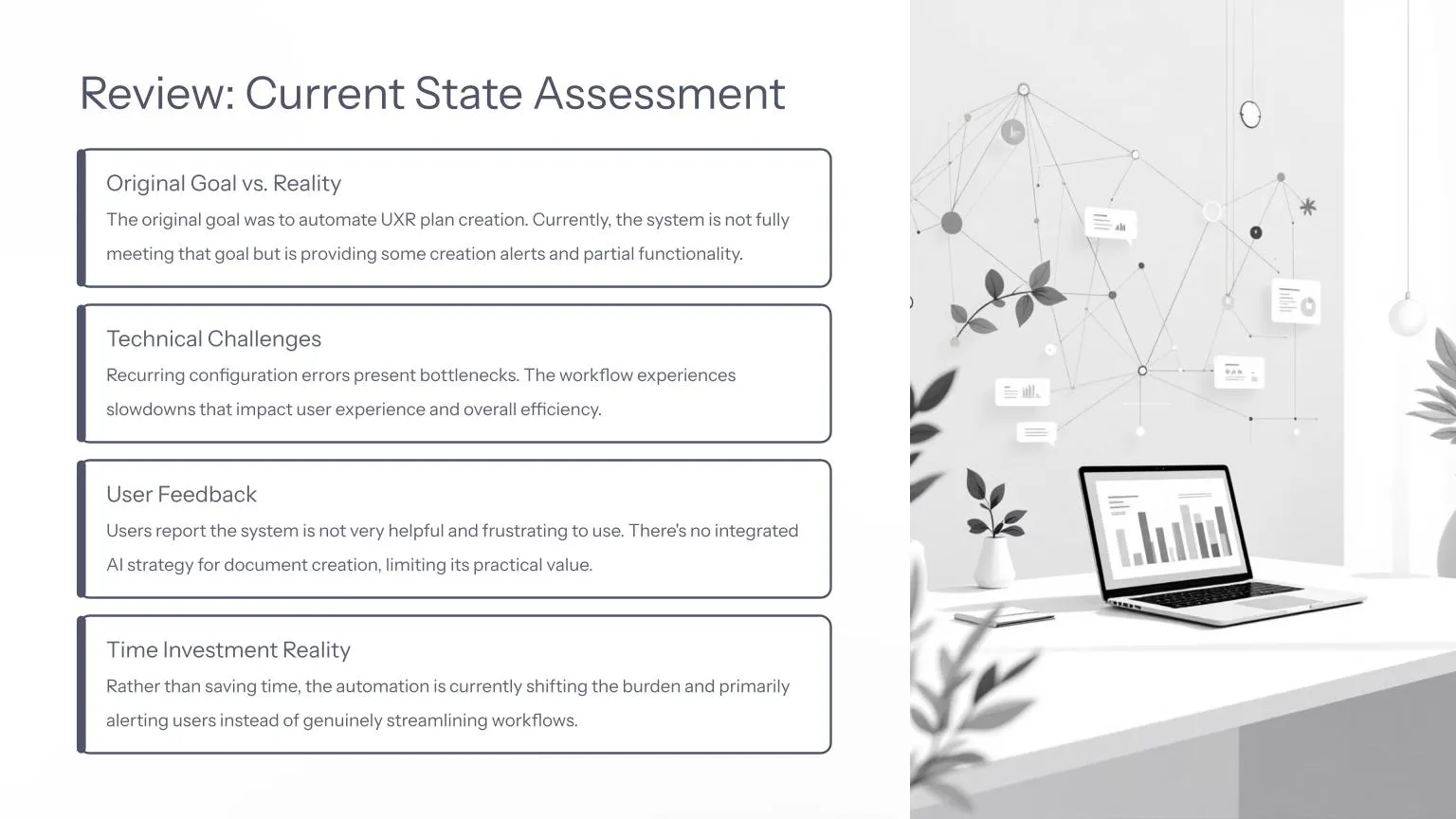
Research Methodology
- System mapping of UXR workflows
- Identification of high-impact automation points
- Prioritization based on time, volume, velocity
- Iterative testing + validation
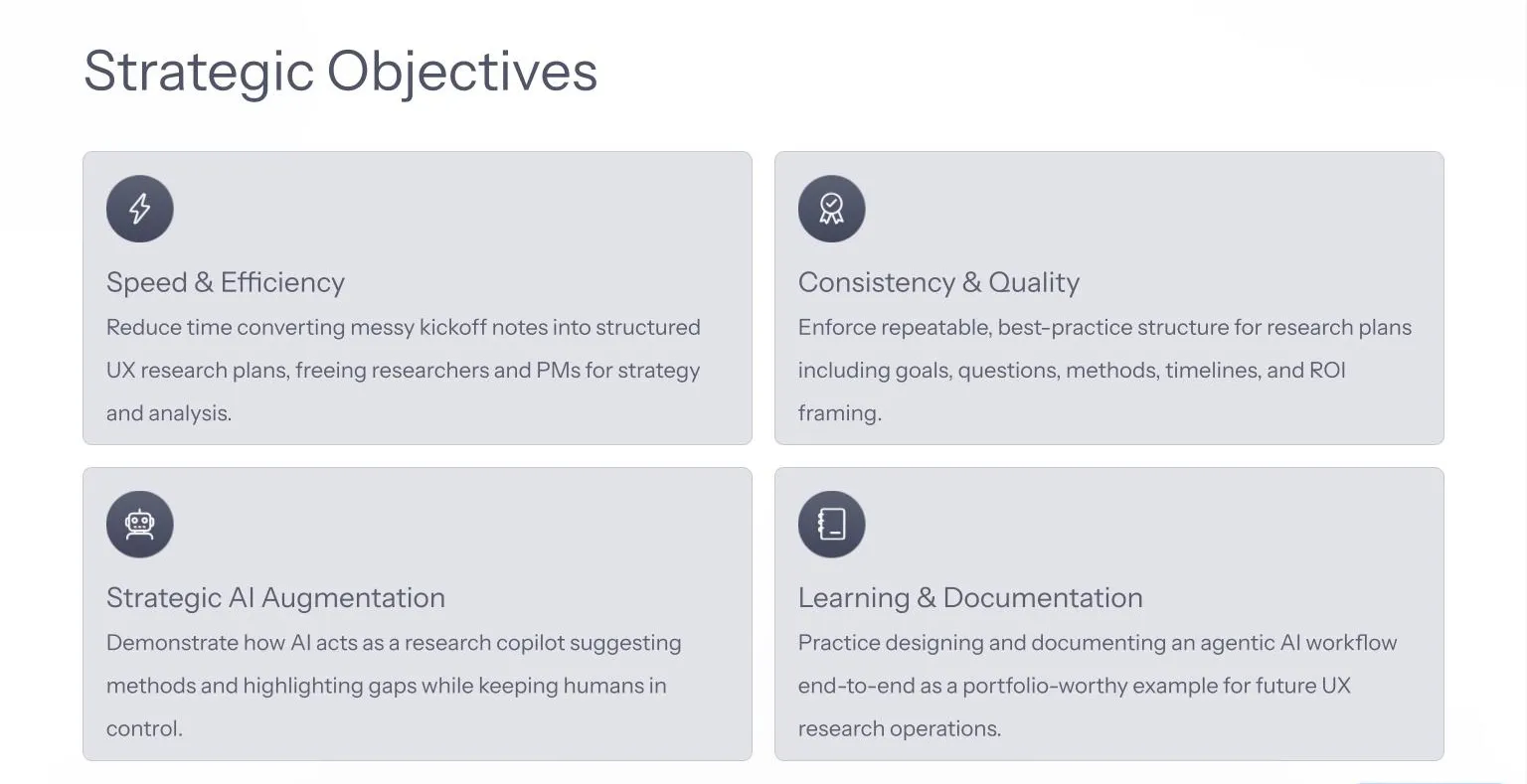
Design Strategy & Alignment
Approach
Focused on project intake → research planning as highest-leverage opportunity
Principles
- Input → output automation
- Measurable quality loop
- Scalable architecture
- Human-in-the-loop governance
Consulting Signals
This is what hiring managers are really scanning for:
- Identified high-ROI automation opportunity
- Designed system-level solution (not feature-level)
- Balanced speed, quality, and governance
- Built for scalability across teams
- Measured impact with clear metrics
System Flow
Challenges
Integration limits · data inconsistency · scaling constraints
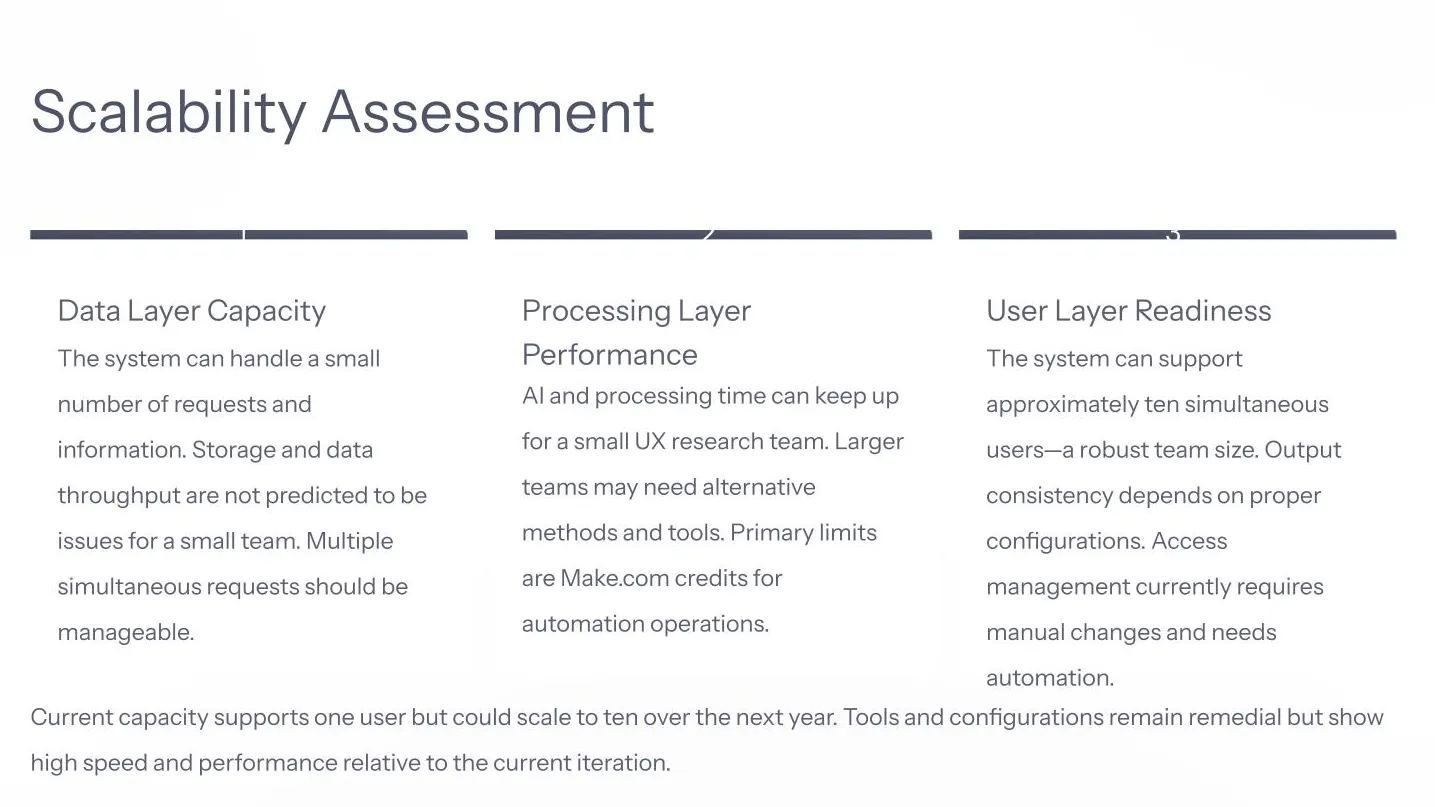
Lessons
Systems > tools · structure drives reliability · human oversight is critical
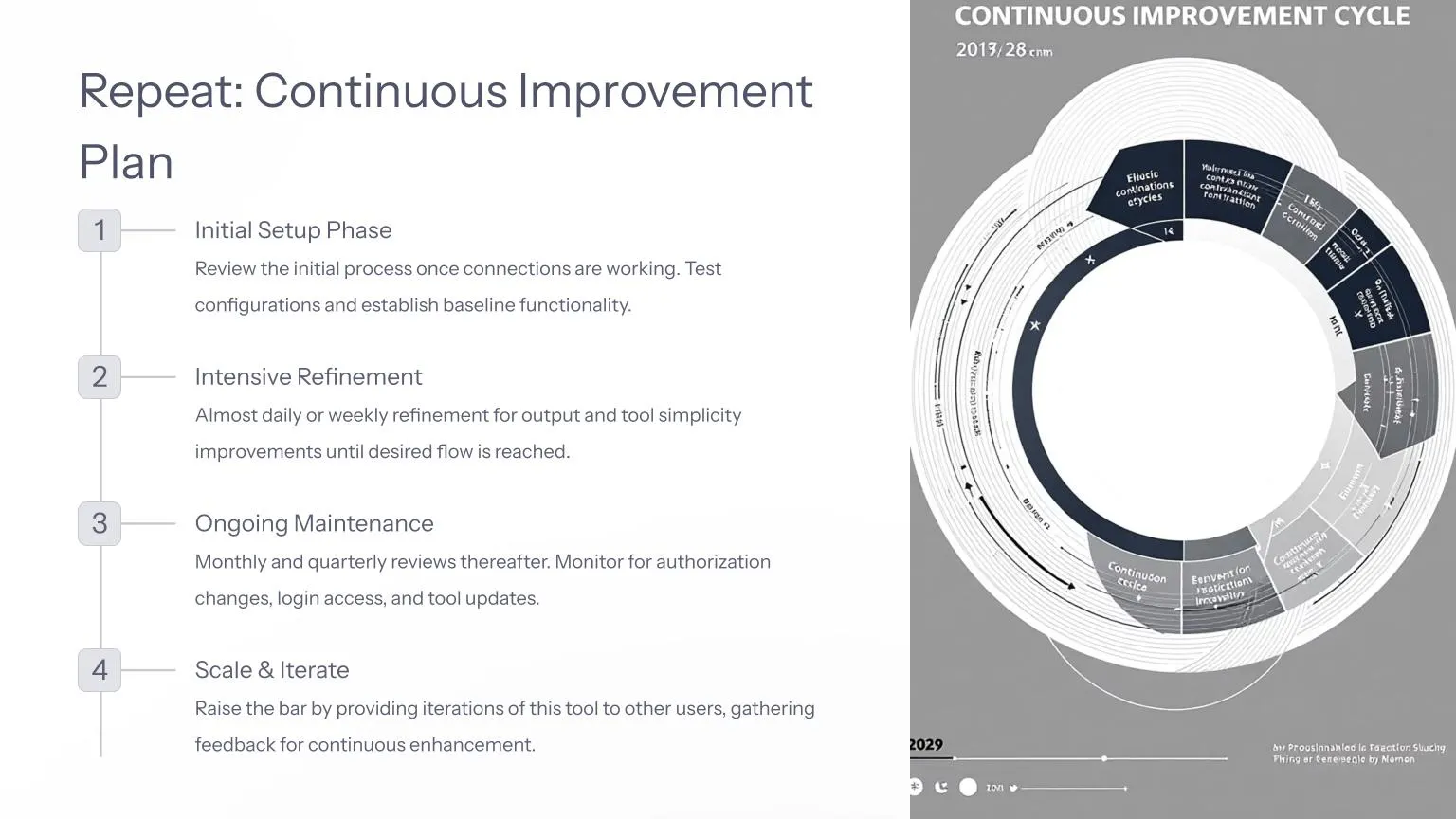
Next Steps
Scale infrastructure · expand AI capabilities · formalize governance + KPIs
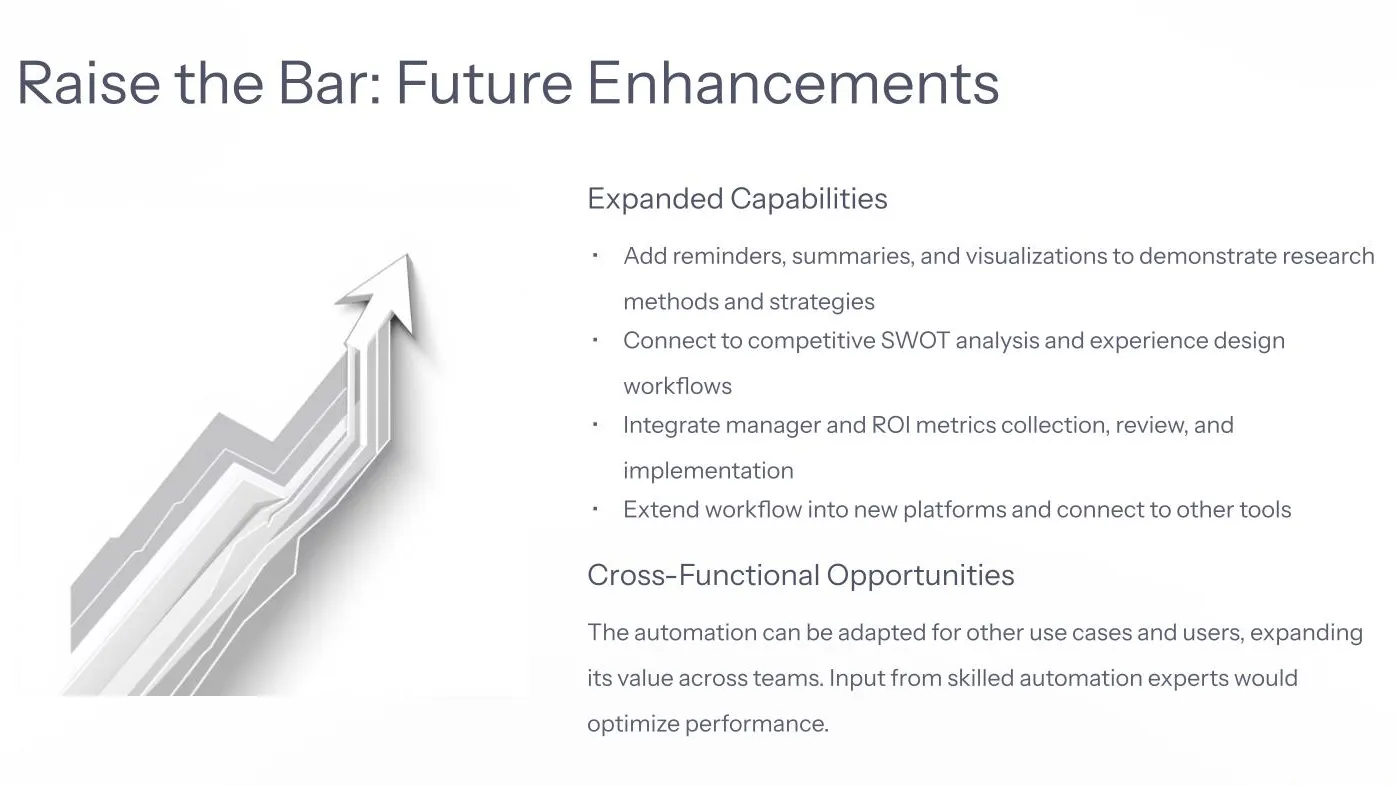
Tools · Skills · Systems
Tools: ChatGPT · Make · n8n · NotebookLM · Miro
Skills: AI workflow design · systems thinking · research ops · governance
Systems Built: AI research workflows · automation pipelines · scalable ops systems